Tuesday, January 31, 2017

Out, Out by Robert Frost and Macbeth


While reading Macbeth, I realized that there are numerous themes, quotes, and character traits that modern writers, artists, and directors take inspiration from. With all these options to explore, I decided to compare a poem to the play. ‘Out, Out’ by Robert Frost is a poem that includes events and a character that can be related to Lady Macbeth in Act 5. (Just for some basic background information) ‘Out, Out’ is a short poem that harshly and artistically tells a story of a boy cutting wood with a saw and accidentally cutting off his hand. The story takes place in the mountains of Vermont, so unfortunately, a doctor cannot get to the boy quickly enough to help him, and he dies. I think the most obvious similarity that shows that Robert Frost is inspired by Macbeth is the title. The phrase out, out is used by Macbeth when he says, “Out, out, brief candle! Life's but a walking shadow,”(Act 5, Scene 5, 23-24) I think that this line can be connected to the poem because Macbeth is saying that life is over quickly, and in this poem a young boy loses his life quickly and the experience is over and done being described in a short poem. Lady Macbeth also says out, out when she says while sleepwalking, "Out, damn'd spot! out, I say!" (Act 5, Scene 1, 34) Another resemblance that this poem has to Macbeth is that in both, a doctor is unable to help the injured/sick person. In the poem, the doctor can not save the boy and in Macbeth, the doctor can not help Lady Macbeth. Also, each character that is hurt for different reasons, is hurt because they have taken on a task that isn’t normally expected of them (in society). The boy in “Out, Out” was a “big boy Doing a man’s work, though a child at heart.” Lady Macbeth, by planning and encouraging the killings of multiple people in order to gain power was doing something that was (as the poem said for the boy) “a man’s work.” Another connection that I made between the two pieces is that in both, it seems as if the deaths of these characters is not taken as seriously as it should be and the people around them continue living their lives with other things prioritized. In Macbeth, after Lady Macbeth dies, the other characters are distracted by the threat of an attack from English soldiers and aren’t sad. Very similarly, the boy’s death in Out, Out is not taken seriously. This can be seen by the other character’s reactions to his death, “And they, since they were not the one dead, turned to their affairs.” Robert Frost’s poem is symbolic of Lady Macbeth's situation in Act 5 for these reasons.

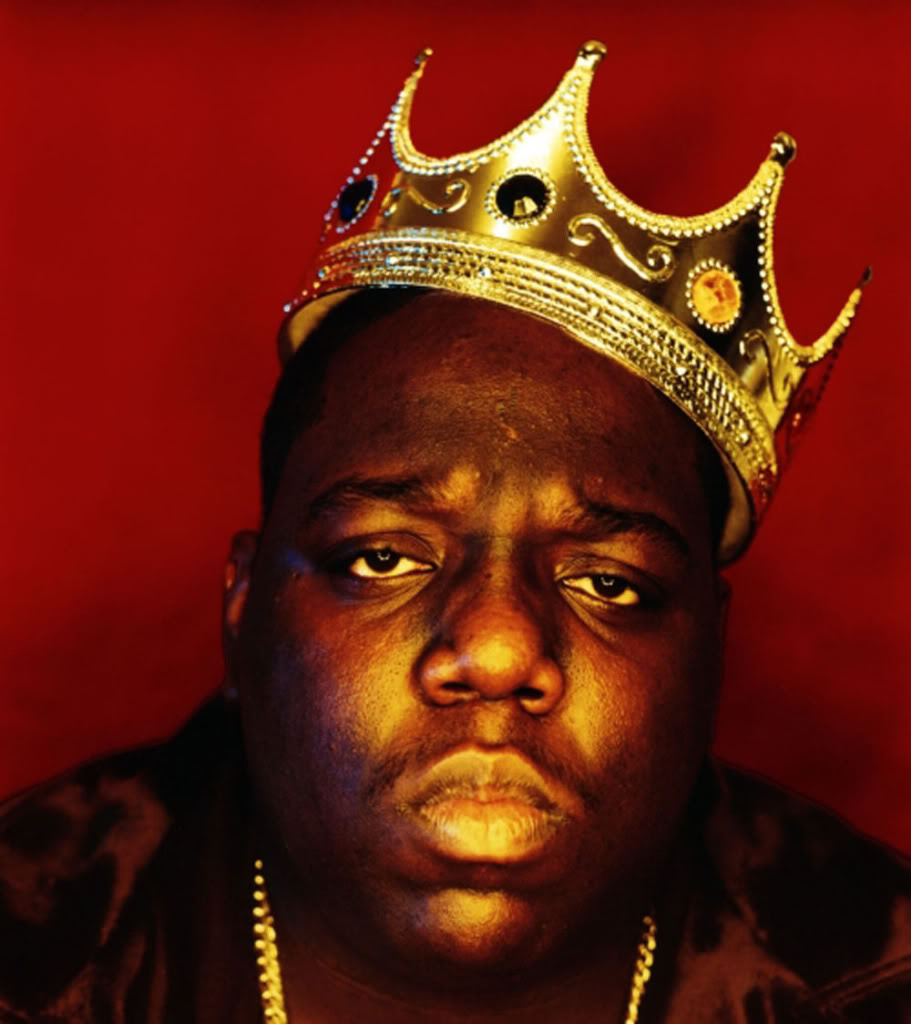
Biggie and Macbeth

One person I would compare to Macbeth from modern times is Christopher Wallace, more commonly known as the Notorious BIG or Biggie Smalls. Macbeth rose to the top by doing whatever was necessary to succeed and by having incredible ambition and talent as a warrior. Biggie shared all of these characteristics. Like how Macbeth killed and betrayed people standing in his way, Biggie committed numerous crimes in order to gain notoriety and respect, like selling crack, beating people, and robberies. Like how Macbeth was indisputably a great warrior, Biggie was truly one of the greats, but through feuds and other pernicious acts he rose to fame quicker than he could have otherwise. By starting feuds with other rappers and producers like Tupac Shakur and Suge Knight, Biggie became a king in a sense. In what is perhaps the most famous picture of him, he is seen wearing a golden crown, showing how in many ways he was a king. Small's biggest rival, Tupac Shakur, was killed in a drive by shooting in which Biggie was implicated. Much like Macbeth killing Duncan, Biggie had to kill another king to be on top. Also like Macbeth, once in power Biggie became paranoid and violent. Macbeth did violent and foolhardy things like kill Macduff's family and Banquo, and Biggie committed similar acts like assaulting fans and possessing large amounts of illegal weapons. Biggie's end was also similar to Macbeth's. The east west rivalry was what spurred Tupacs death, and as an act of retaliation Biggie was killed in a drive by, believed to be done by a member of west coast scene. Biggie also had lyrical similarities to lines from the play. In "Who Shot Ya", he says, "Everything around me two Glock 9s, Any motherfcker whispering about mines, And I'm Brooklyn's finest, You rewind this, Bad Boy's behind this." This seems like a very forward admission of guilt in the death of Tupac, but due to his fame and status Biggie was untouchable except for by violence. Lady Macbeth, her mental status deteriorating much like Biggie's due to paranoia, says, "What need we fear who knows it, when none can call our power to account? Yet who would have thought the old man to have had so much blood in him?" (5.1.42), demonstrating how her mental status is similar to that of Biggie after the hit of Tupac. Obviously the stories of these two individuals do not line up perfectly, but the same motivations and fears drove the two men to do the horrible and great things that they did, showing the consistency of human nature throughout time.


Macbeth Similar to “The Tell-Tale Heart” by Edgar Allan Poe

Okay so this is quite a stretch, but when I was reading Macbeth I couldn't help but recognize the similarities between Macbeth and the character in the short story "The Tell-Tale Heart." The first thing that stood out to me was when Macbeth says "The bell invites me" reminded me of how Poe kept saying "louder, louder, louder," (the heartbeat he kept hearing.) Another thing that was similar was how they were both extremely paranoid after they killed someone. Macbeth was going crazy thinking that Malcolm and Donalbain would catch on to him and Lady Macbeth says that he needs to stop thinking about it or he will go mad. In Tell Tale Heart, the whole beginning part was him in denial about being a mad man. He says "So you think that I am mad? A mad man cannot plan," which also reminds me of Macbeth because he was continuously getting mad, yet he was still able to plan the death of Banquo. Macbeth's dagger was kind of like the old mans eye. One last similarity I saw was when Poe says "There was no reason for what I did I did not hate the old man." This reminded of how Macbeth did not hate Duncan nor Banquo yet he killed them both.. sus. 

Shakespotter


Recently I was talking to one of my friends outside of KO, and I mentioned that I was reading Macbeth in my English class. She said that her sister had told her something about Harry Potter and Macbeth being really similar. I like to think of myself as a true Potterhead and seeing that we were reading Macbeth in English, I had to investigate the matter. Upon researching the topic, I discovered that Macbeth is actually J.K. Rowling’s favorite Shakespeare play and she implemented a lot of parts of Macbeth into the Harry Potter series (including the movies!). After reading this, I can now see a lot of parallels with Macbeth, one of the most significant being Harry’s prophecy. This is something that has actually been discussed by Rowling herself. She says, “What if Voldemort never heard the prophecy? It’s the Macbeth idea…If Macbeth hadn’t met the witches, would he have killed Duncan? Would any of it have happened? Is it fated or did he make it happen?” On her website she referred to Macbeth again when talking about Harry’s prophecy: “The prophecy (like the one the witches make to Macbeth) becomes the catalyst for a situation that would never have occurred if it had not been made.” I definitely didn’t think about that when I was reading the books or even after. Relating more to the movies, I found out is that the director for Harry Potter and the Prisoner of Azkaban actually came up with an idea for a song in the movie with the majority of its lines quoted straight from Macbeth Act IV Scene 1. I’ll put the video down below. Not only this, but the poster for the same move (below) also nudges at a line in Macbeth. There are a lot more parallels and a lot of them are discussed on this great website called "Shakespotter" and if you're interested in reading more about the parallels or you just like Macbeth or Harry Potter, I highly suggest you go read some of their posts. I'll put the link to that below too. ALSO, I just found out that the actor who plays King Duncan in the Fassbender version of Macbeth plays Remus Lupin in Harry Potter and the Prisoner of Azkaban (MIND BLOWN). 


Shakespotter: https://shakespotter.wordpress.com/


Caligula and Macbeth

Emperor Gaius Caesar, also known as Caligula, and Macbeth share many similar ruling styles. For those who do not know who Caligula is, he is a well known Roman emperor who succeeded Tiberius. Like Macbeth, Caligula is depicted as being an unpredictable/panicky ruler. Both rulers also become very anxious and worried, when challenged. As a result, they believe eliminating their opponents will resolve their problems, as well as protect their power/throne. Throughout Macbeth, we notice that whenever the power/throne of Macbeth is threatened, Macbeth becomes very worried and feels he must kill anyone that opposes or gets in his way (specifically seen after he kills Duncan and is driven mad). For example, Macbeth felt it was necessary that he kill Banquo and his sons, given that they were believed to have been the heirs to his throne and could have possibly been threats to Macbeth. Additionally, Caligula, like Macbeth, is known for being a tyrannical ruler. In the play Macbeth, Macbeth is constantly referred to as a tyrant. This is because, while he was ruling Scotland, he was requesting for everyone to be killed, and as a result, was spreading illness and fear all over the country. 

Macbeth and The Lion King

As I was reading Macbeth, I began to realize how similar the story is to "The Lion King". In both of these stories, power and the want of power are constant themes. In Macbeth, Lady Macbeth and Macbeth were willing to do whatever it took to gain power. In "The Lion King", Scar's brother Mufasa is the king. Scar has always been jealous of his brother, so he will do anything to gain the power, including killing him. Macbeth kills Duncan to gain power, and Mufasa kills his brother. Both of these events had a large effect on the people (or animals) around them. In the end, it wasn't just about gaining power. Much bigger problems were sparked by both of these characters' betrayal. Macduff fights Macbeth to take the throne away from him because he is a tyrant. Just like how Simba and Scar get into a fight because the throne does not rightfully belong to Scar.

Hamilton and Macbeth

While reading act 5 scene 5 of Macbeth, I was very impressed with how Shakespeare was able to express Macbeth's negative feelings on life after Lady Macbeth killed herself as Macduff and Malcolm's army approached his castle. On page 177, when Macbeth expresses how he feels after finding out Lady Macbeth has died, I was surprised to read the quote, "Tomorrow and tomorrow and tomorrow / Creeps in this petty pace from day to day" (5.5.21-22), because that is a line from a song called "Take a Break" in Hamilton! However, while Macbeth uses this quote to show how life is meaningless after his wife commits suicide, Hamilton uses this quote with a different meaning while writing a letter to Angelica. In this letter, he says, "My dearest Angelica, tomorrow and tomorrow and tomorrow creeps in this petty pace from day to day. I trust you'll understand the reference to another Scottish tragedy without my having to name the play." He is expressing how his life is a tragedy much like the tragedy of Macbeth, for his efforts to enforce a financial system are unsuccessful. Angelica tells him to take a break, but Hamilton is too determined to quit. This shows how the same quote from Macbeth is used in Hamilton, yet it carried a very different meaning.